
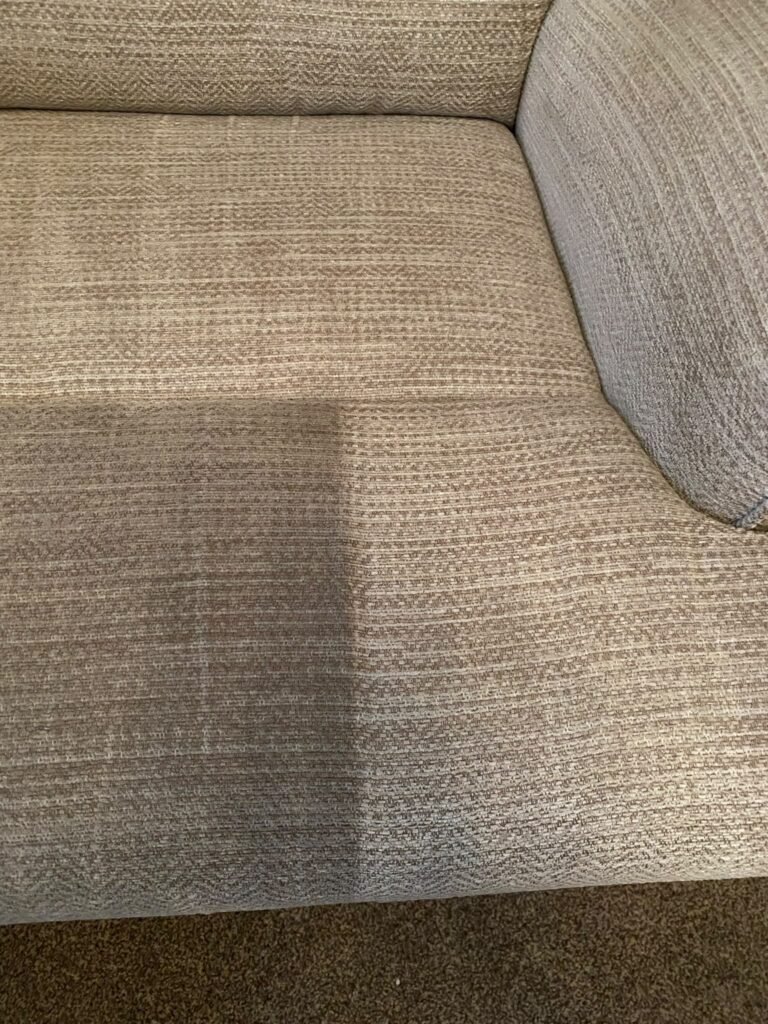
Your sofa probably gets more use than any other piece of furniture in the house. Regular sofa cleaning keeps it looking good, smelling fresh and lasting years longer.
I’m Russell from Dirt Busters, and I clean sofas and upholstery across Bridgend and South Wales. Here’s my practical guide to looking after a fabric sofa at home, and knowing when it’s time to call in a professional.
Why sofas get dirty so quickly
We sit, lounge, eat and even nap on our sofas. As a result, fabric slowly soaks up body oils, sweat, food crumbs and everyday dust.
Pets add hair and dander, while children add sticky fingers and spills. Over time, this builds up into darker armrests, greasy headrest areas and a general dull look.
Check the cleaning code first
Before you try any sofa cleaning at home, look for the care label. It’s usually under the seat cushions or on the base of the frame. Many sofas carry a cleaning code like these:
- W: water-based cleaners are generally suitable
- S: solvent-based cleaners only, so avoid water
- WS or SW: either water or solvent-based cleaners may be used with care
- X: vacuum only, and leave anything else to a professional
If there’s no label, or you’re unsure, don’t guess. Using the wrong product can cause water marks, shrinkage or colour loss.
Everyday sofa care
A few simple habits make a huge difference. Most of them take only a few minutes a week.
- Vacuum the sofa weekly with an upholstery attachment, including under the cushions
- Plump and rotate reversible cushions so they wear evenly
- Keep the sofa out of strong direct sunlight to reduce fading
- Use washable throws where pets or children sit most
- Avoid eating greasy food on light-coloured fabrics
Russell’s tip: Pay attention to the arms and headrests. That’s where oils from skin and hair build up first, and they’re often the first areas to look grubby.
Dealing with spills on a sofa
Fast action is key. Blot the spill with a clean white cloth, working from the outside in, and never rub.
If the fabric suits water-based cleaning, dampen the cloth with a little cool water and blot again. Always test in a hidden area first. Above all, avoid soaking the fabric, because too much water can leave rings and seep into the cushion filling.
Never use bleach or strong household cleaners on upholstery. They can strip colour and weaken fibres permanently.
Pet hair and odours
If your dog or cat shares the sofa, hair and smells build up quickly. A rubber glove or a damp rubber brush is great for lifting hair before you vacuum.
Meanwhile, washable throws on your pet’s favourite spot will save the fabric underneath. Wash them often, because they hold oils and odours too.
If a smell keeps returning, it has usually worked into the cushion filling. At that point, a professional clean with a sanitise step is the most effective fix.
Signs your sofa needs professional sofa cleaning
Even with good care, fabric sofas need a deep clean from time to time. Look out for:
- Dark or shiny patches on the arms, seat fronts and headrests
- Lingering smells from pets, food or smoke
- Stains that won’t shift with gentle blotting
- Fabric that looks flat, dull or feels slightly sticky
- A sofa you’ve bought second-hand or inherited
How I clean sofas
Every upholstery job starts with an inspection. I check the fabric, the care label and any colour-stability issues before choosing a method.
Next, I vacuum thoroughly and pre-treat soiled areas and stains. Then I clean using a method that suits the fabric, followed by a sanitise. I use professional products you can’t buy in shops, chosen for the specific material.
You can find out more on my upholstery cleaning page, or see before-and-after results in my gallery.
Delicate fabrics need a professional
Some fabrics really shouldn’t be tackled at home. Velvet, chenille, silk blends and anything marked with an X or S code can easily be damaged by DIY attempts.
Similarly, some fabrics have dyes that bleed when wet. In these cases, the safest option is to vacuum only and call a professional. I’d much rather advise you over the phone than see a sofa ruined.
Keeping your sofa cleaner for longer
After a professional clean, stain protection is well worth considering. It helps spills sit on the surface for longer, giving you more time to blot them up.
Find out more on my stain protection page. It’s particularly useful for pale fabrics and busy family homes.
Frequently asked questions
How often should a sofa be professionally cleaned?
For most homes, every 12 to 18 months works well. With pets or young children, once or twice a year keeps things fresher.
Can you clean sofas and carpets on the same visit?
Yes, I clean carpets, sofas, mattresses and rugs, and there’s a discount when you book more work together.
Book your sofa cleaning
With a little regular care, a fabric sofa can look great for years. When it needs more than a vacuum, professional sofa cleaning brings it back to life safely.
Call or text me on 07896 492006 or get a free quote. There’s no upfront payment, and I cover 25 miles around Bridgend, from sofa and upholstery cleaning here in Bridgend to sofa cleaning in Cardiff.