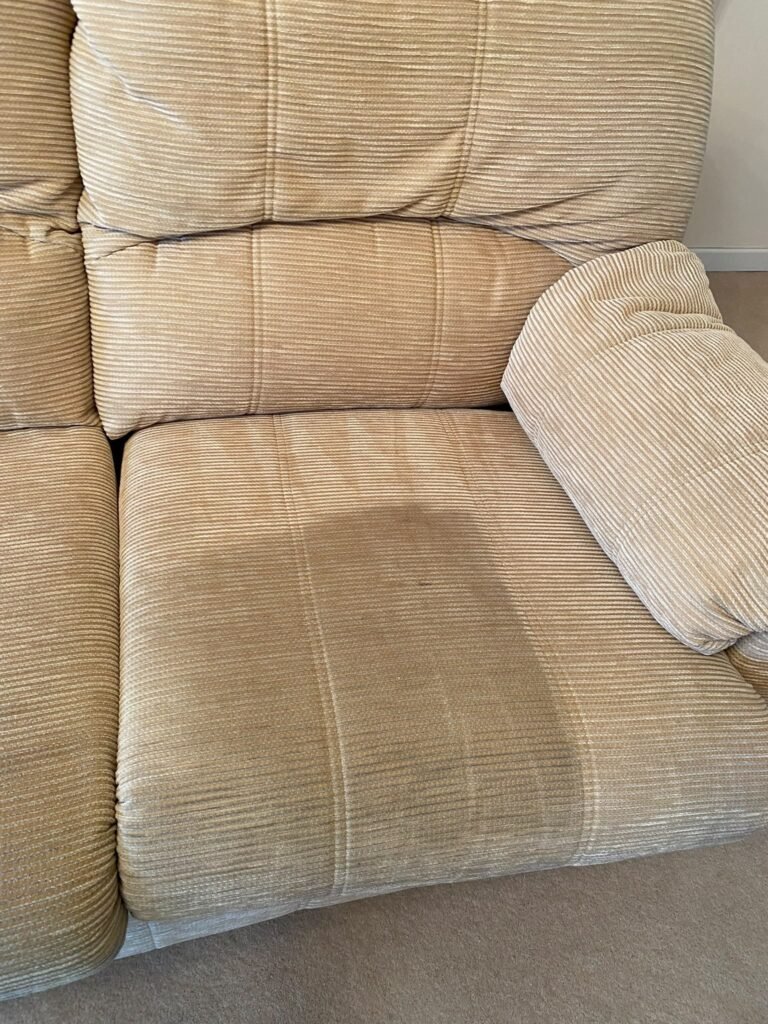
Fabric sofas come in a huge range of materials, from hard-wearing polyester to delicate velvet and natural linen. Each one reacts differently to water, heat and cleaning products, which is why a sofa that cleans up beautifully in one home can shrink, mark or fade in another if it’s treated the wrong way.
I’m Russell from Dirt Busters, and I clean fabric upholstery in homes across Bridgend, Cardiff and Swansea. Here’s a plain-English guide to which fabrics can be cleaned, what the care label codes mean, and when it’s best to leave things to a professional.
Start with the care label
Most sofas and armchairs have a care label tucked under a seat cushion or on the base. It usually carries a cleaning code, and it’s the first thing I check on every job:
- W: water-based cleaning is fine
- S: solvent-based cleaning only, no water
- WS: either water-based or solvent cleaning can be used
- X: vacuum only, no wet or solvent cleaning
No label? That’s common with older or second-hand furniture. It doesn’t always mean a sofa can’t be cleaned, but it does mean the fabric needs a closer look and a test in a hidden spot before anything else happens.
Fabrics that usually clean well
Polyester and microfibre
These synthetic fabrics are found on lots of modern family sofas. They’re generally hard-wearing and respond well to professional cleaning, which makes them a good choice for homes with children and pets. Microfibre can water-mark if it’s cleaned unevenly at home, so it benefits from a careful, even professional clean.
Chenille and textured weaves
Soft, tufted chenille is comfortable and popular, but its pile can flatten or distort if it’s scrubbed. It needs gentle agitation and grooming afterwards so it dries evenly and keeps its texture.
Wool and wool blends
Wool is naturally resilient and hides soil well, but it’s sensitive to heat and strong alkaline products, which can cause shrinkage or colour loss. As a WoolSafe Approved Service Provider, I use products and methods suited to natural fibres.
Fabrics that need extra care
Cotton and linen
Natural plant fibres look lovely but can shrink, and they’re prone to browning, where a yellow-brown tide mark appears as the fabric dries. Getting the moisture level and products right matters a great deal here.
Velvet
Velvet’s short, dense pile shows every mark and can crush or bruise if it’s handled roughly. It needs a light touch and careful grooming. If your velvet sofa has an S or X code, please don’t try home remedies on it.
Silk and delicate blends
Silk and other delicate fabrics can lose colour or texture very easily. These are best left to a professional, and sometimes the honest answer is that a fabric shouldn’t be wet-cleaned at all. If that’s the case, I’ll tell you rather than risk damage.
What about leather?
I clean fabric upholstery only, so I don’t offer leather cleaning. Leather needs its own specialist products and conditioning, so it’s worth finding a leather specialist for that.
How I clean upholstery safely
Every sofa gets the same careful routine, whatever the fabric:
- Read the care label and cleaning code, and check the fabric, seams and any existing wear
- Test my products in a hidden spot to check the colours are stable
- Vacuum thoroughly to lift crumbs, pet hair and dust from seams and cushions
- Pre-treat arms, headrests and spills to loosen body oils and grime
- Clean with the method that suits the fabric, without soaking the filling
- Groom the fabric so it dries evenly
Russell’s tip: Blot spills straight away with a clean white cloth and never rub. Rubbing spreads the stain and can damage the fibres, especially on velvet and chenille.
Should I protect my sofa after cleaning?
If you’ve got children, pets or a light-coloured fabric, it’s worth considering. I apply Asgard Next Generation Protector to freshly cleaned upholstery for £120, compared with around £250 in many furniture shops. It helps spills sit on the surface long enough to blot away. You can read more on my stain protection page.
Frequently asked questions
Can a sofa with an X code be cleaned at all?
An X code means vacuum only, so wet or solvent cleaning isn’t recommended. Regular, gentle vacuuming with an upholstery tool is the best way to look after it.
Why has my sofa got water marks after I cleaned it?
Water marks and rings usually appear when a fabric is cleaned unevenly or too wet, or when the wrong product has been used for its code. A professional clean can often improve them, but it depends on the fabric.
Can you clean my sofa and carpets on the same visit?
Yes, and booking more work together earns a discount. Lots of customers have their lounge carpet, stairs and sofa done in one go.
Book upholstery cleaning near you
If you’re not sure what your sofa is made of or whether it can be cleaned, I’m happy to take a look and give you an honest answer. See sofa and upholstery cleaning in Bridgend or sofa and upholstery cleaning in Cardiff, or call or text me on 07896 492006 for a free quote. There’s no upfront payment.