
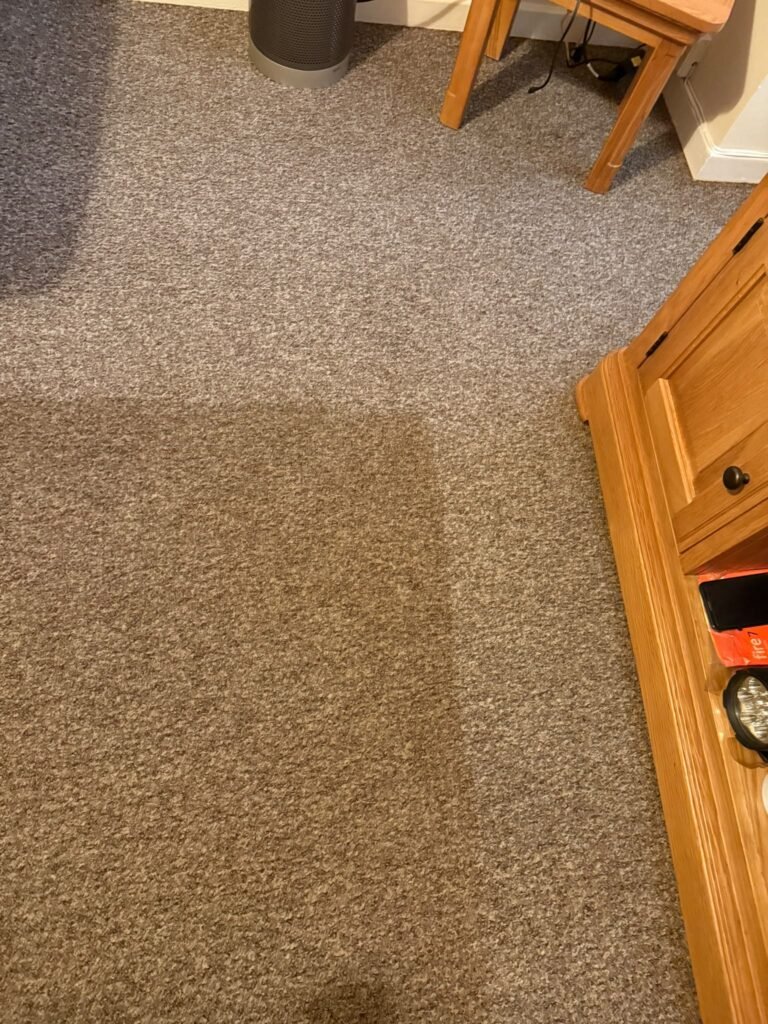
Every year I visit homes where the owner has found thin, bald patches along the edge of a room. More often than not, carpet moths are to blame. They’re small and easy to miss, yet the damage they leave behind can be permanent.
I’m Russell from Dirt Busters, and I’ve cleaned carpets for more than ten years. Below, I’ll explain how to spot the signs, why moths choose certain carpets, and what you can do to protect your floors.
What are carpet moths?
The term usually covers a couple of species of clothes moth. In the UK, the most common are the webbing clothes moth and the case-bearing clothes moth. The adults are small, buff or greyish, and often run or hop rather than fly.
Importantly, the adult moths don’t eat anything. The damage comes from the larvae. These tiny, cream-coloured grubs feed on keratin, a protein found in wool, feathers, fur and hair.
That’s why wool carpets and rugs are at the greatest risk. Synthetic carpets are less appealing, although larvae may still feed on hair, skin flakes and food spills caught in the pile.
Signs of carpet moths
Larvae prefer dark, quiet places that are rarely disturbed. As a result, the first signs often appear where the vacuum doesn’t reach.
- Thinning or bald patches along skirting boards and in corners.
- Damage under beds, sofas, wardrobes and other heavy furniture.
- Tufts that come away easily when you run your hand over them.
- Small, silky tubes or cases in the base of the pile.
- Tiny cream larvae, or grains of debris that look like fine sand.
- Small moths fluttering near the floor, especially in warmer months.
Russell’s tip: Slide a torch along the carpet edge at a low angle. Webbing, cases and loose tufts show up much more clearly.
Why carpet moths move in
Moths are attracted to natural fibres, but they also need the right conditions. Warm homes with central heating suit them well, and they’re active for much of the year indoors.
Undisturbed areas are key. A spare room, the space behind a chest of drawers or the floor under a bed can go months without a thorough vacuum. Meanwhile, the larvae feed quietly.
Soiling makes things worse too. Food spills, sweat and body oils make wool even more attractive. So a dirty carpet is generally at higher risk than a clean one.
What you can do straight away
If you suspect a problem, act quickly. The aim is to remove eggs and larvae and to make the area less inviting.
- Vacuum the whole room thoroughly, using the crevice tool along every edge.
- Move furniture where you can and vacuum underneath.
- Empty the vacuum bag or canister outside straight away.
- Check nearby wardrobes, woollen clothes, blankets and cushions.
- Use pheromone traps to monitor whether adult males are still active.
- Keep vacuuming affected areas regularly for several weeks.
Traps are useful for monitoring, but they won’t solve an infestation alone. For a heavy or recurring problem, speak to a qualified pest controller. They can advise on suitable treatments for your home.
How professional cleaning helps
Deep cleaning is a valuable part of dealing with moths. My process starts with an inspection and a thorough vacuum, followed by pre-treatment and extraction. This helps lift eggs, larvae and the soiling they feed on from deep in the pile.
I use either VLM, which uses very little moisture, or hot water extraction with steam from my own machine. You can read about both on our carpet cleaning page.
Wool needs careful handling, so the right products matter. Dirt Busters is a WoolSafe Approved Service Provider, which means I’m trained to clean wool safely.
Protecting rugs and keeping carpet moths away
Rugs are often hit hard, especially if they sit under furniture or are rolled up in storage. Turn and lift them regularly, and vacuum both sides. For valuable or delicate pieces, our rug cleaning service is a safer option than DIY.
Prevention is mostly about routine. Vacuum edges and under furniture regularly rather than just the walkways. Let light and air into spare rooms. Also, store woollen items clean and sealed.
Unfortunately, cleaning can’t replace fibres that have already been eaten. However, stopping the problem early protects the rest of your carpet.
Frequently asked questions
Do carpet moths bite people?
No. Adult moths don’t bite and larvae feed on natural fibres, not people. They’re a nuisance for your furnishings rather than a health risk.
Will a carpet clean kill moth larvae?
Deep cleaning removes many eggs, larvae and the soiling they feed on. For an established infestation, though, combine it with advice from a pest controller.
Do you work in Cowbridge?
Yes. Cowbridge has many older homes with wool carpets, and our carpet cleaning in Cowbridge covers the town and surrounding villages.
Worried about moth damage?
The sooner you deal with carpet moths, the less damage they can do. If you’ve spotted bald patches or larvae, call or text Russell on 07896 492006, or get a free quote. I’ll take a look, explain what I can do and leave your carpets fresh and clean.